Space & Time
Now showing on Space & Time
An LED panel beside my desk shows the cover of whatever record is on the air, at 64 by 64 pixels.
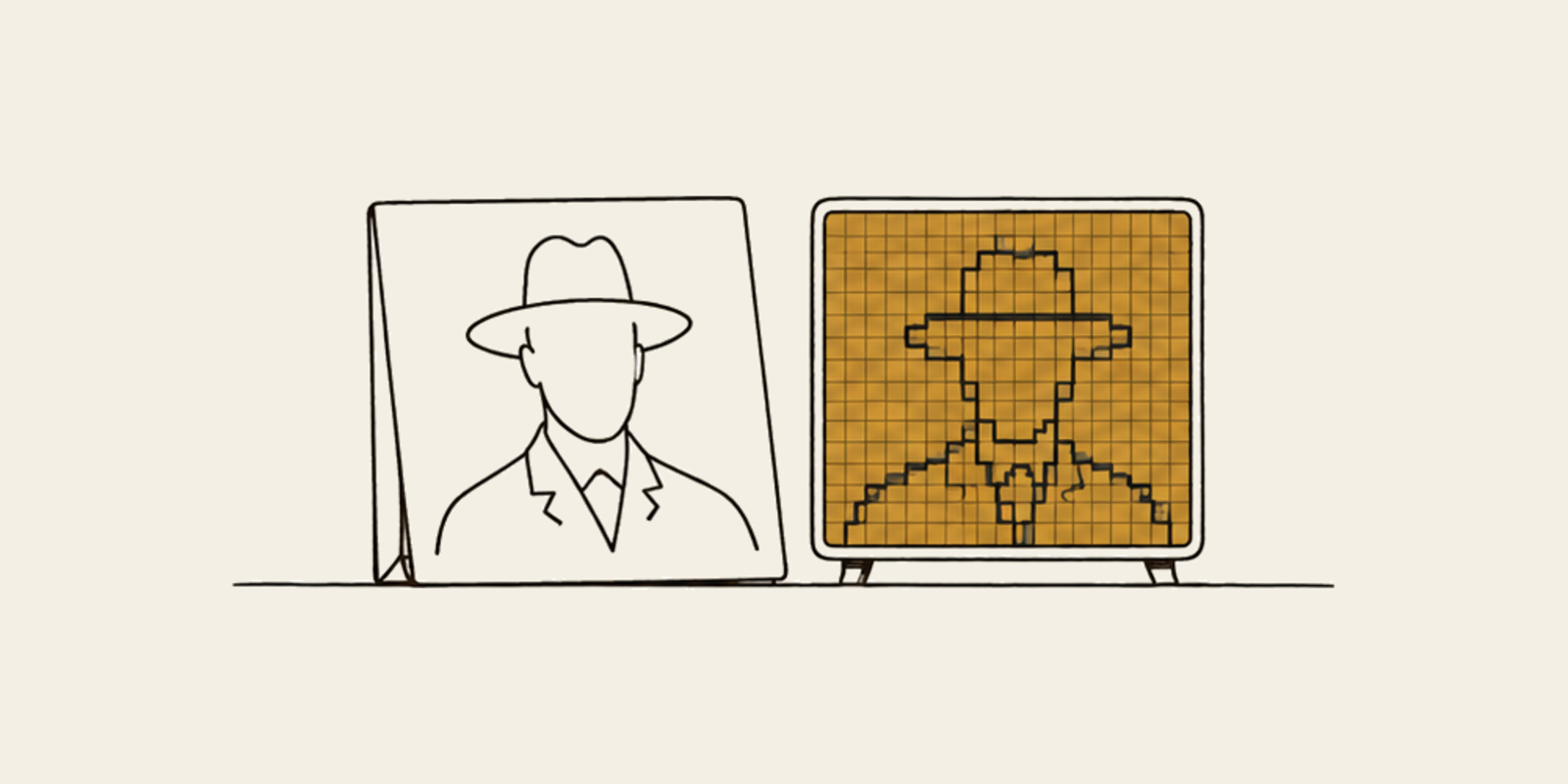
For a while I’d been eyeing those inexpensive, low-resolution LED screens as a cool canvas for a project. Then it occurred to me that the album art from Space & Time was perfect for a square screen. I had the project I’d been waiting for.
So the station has a screen now. It’s a Divoom Pixoo 64, 64 pixels wide and 64 pixels tall, and it shows the cover of whatever record is playing. It stands on a pair of black feet that I 3D-printed with my Bambu X2D.
I didn’t write the software. Claude built it. A small program on the file server in my house watches what the station is playing. The stream plays a few seconds behind the station, so the program learns about each track early, shrinks the cover to 64 by 64, and times it to land when the listener hears the song start. The goal was within 10 seconds. It lands about 0.3 seconds late.
The rules are mine. It shows only what’s on the air on Space & Time, not what I play straight from my own library. Covers show only while someone is listening, and when nothing is playing, the screen turns off. And nothing gets drawn on top of the cover.
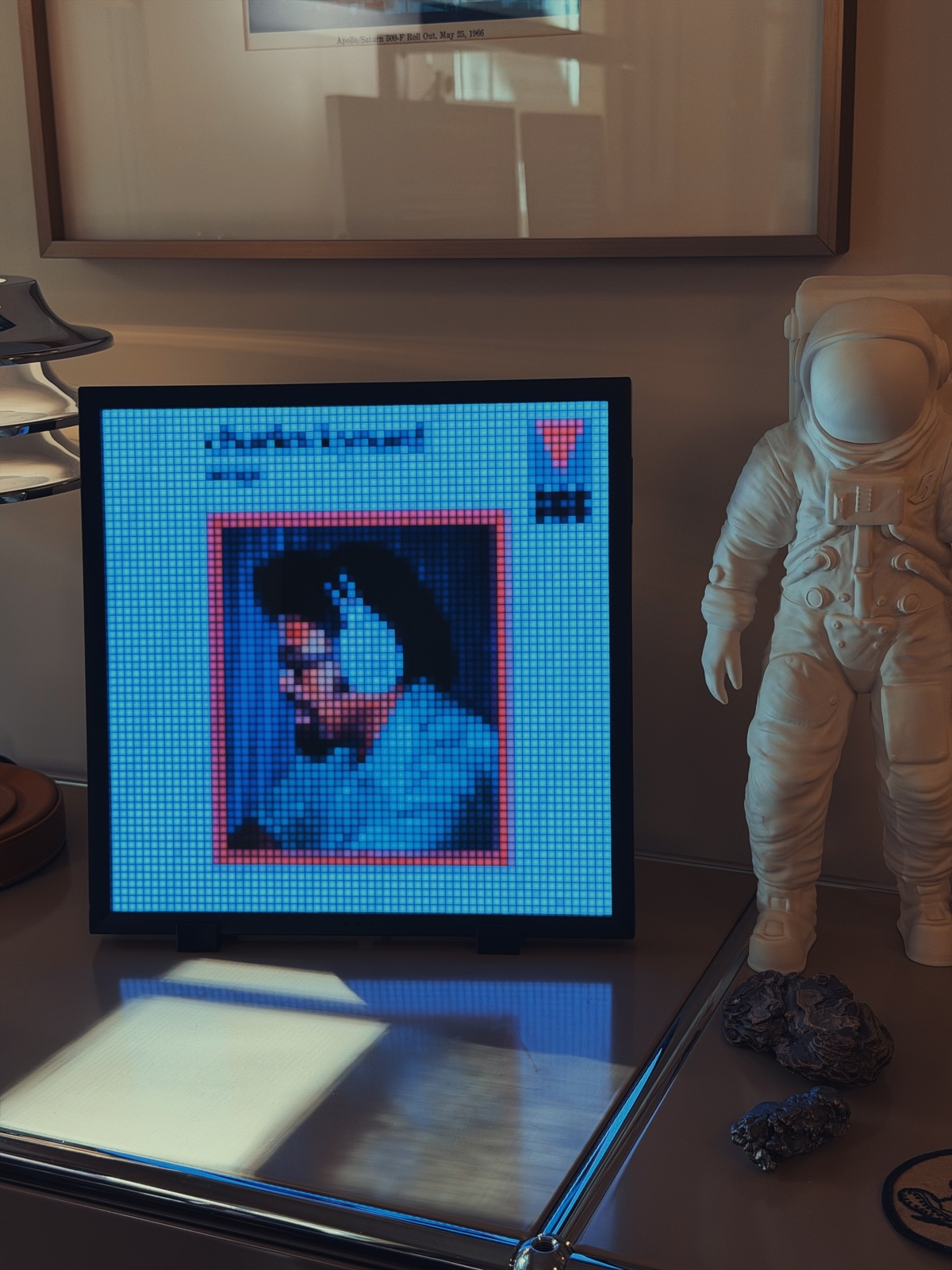
I put it on Wi-Fi around nine on a Saturday night. When it displayed the first few covers, I knew it was going to look the way I had hoped. A 64-by-64 screen has 4,096 pixels, and the covers land someplace in between readable and discernible. Take James Brown’s Black Caesar. I know the album instantly, but it’s not quite readable.

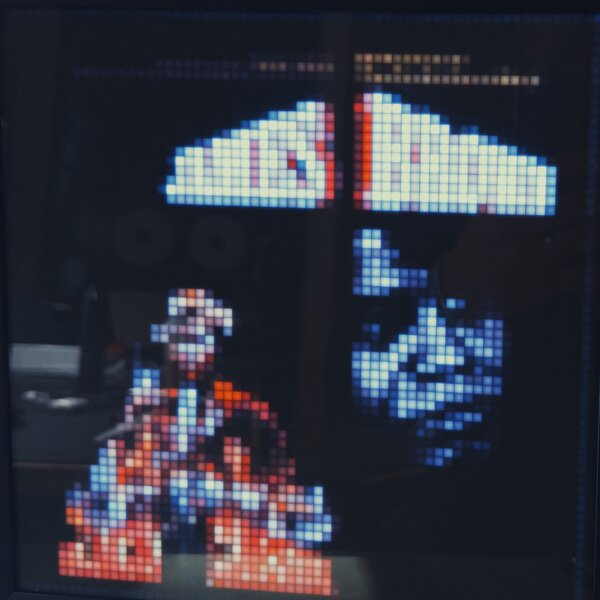
I find it irresistibly charming.
Up close, it’s a grid of colored squares.
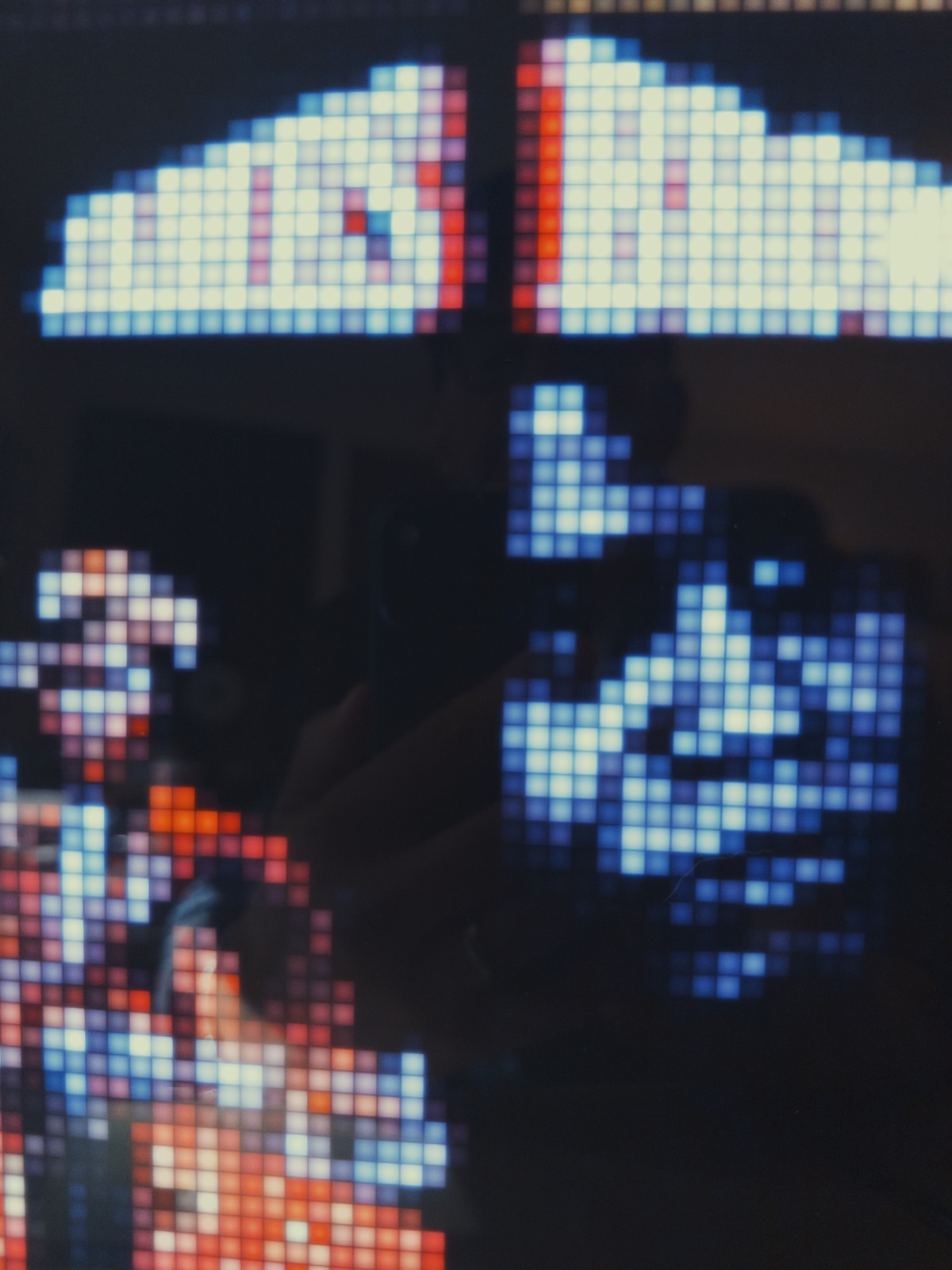

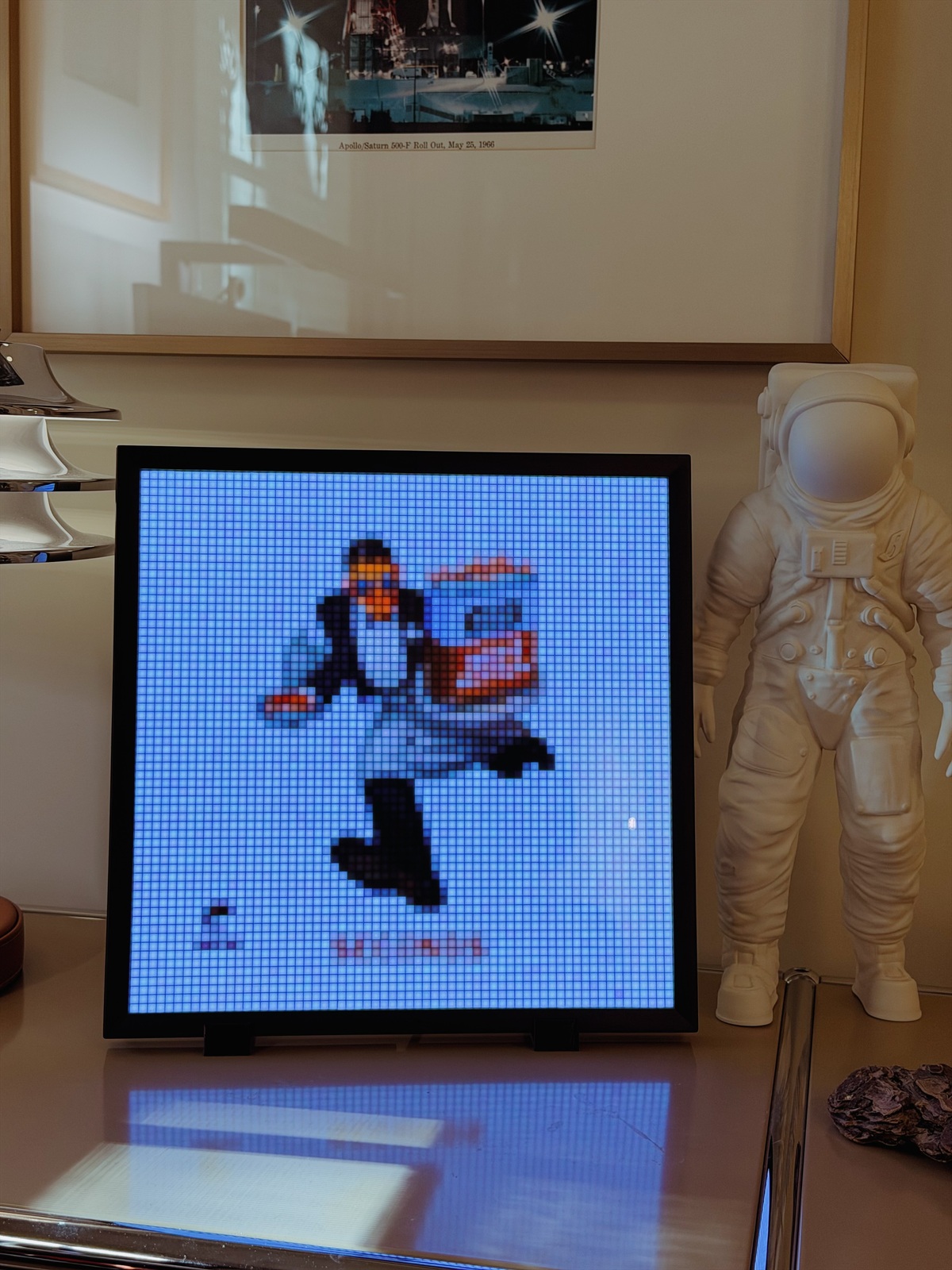
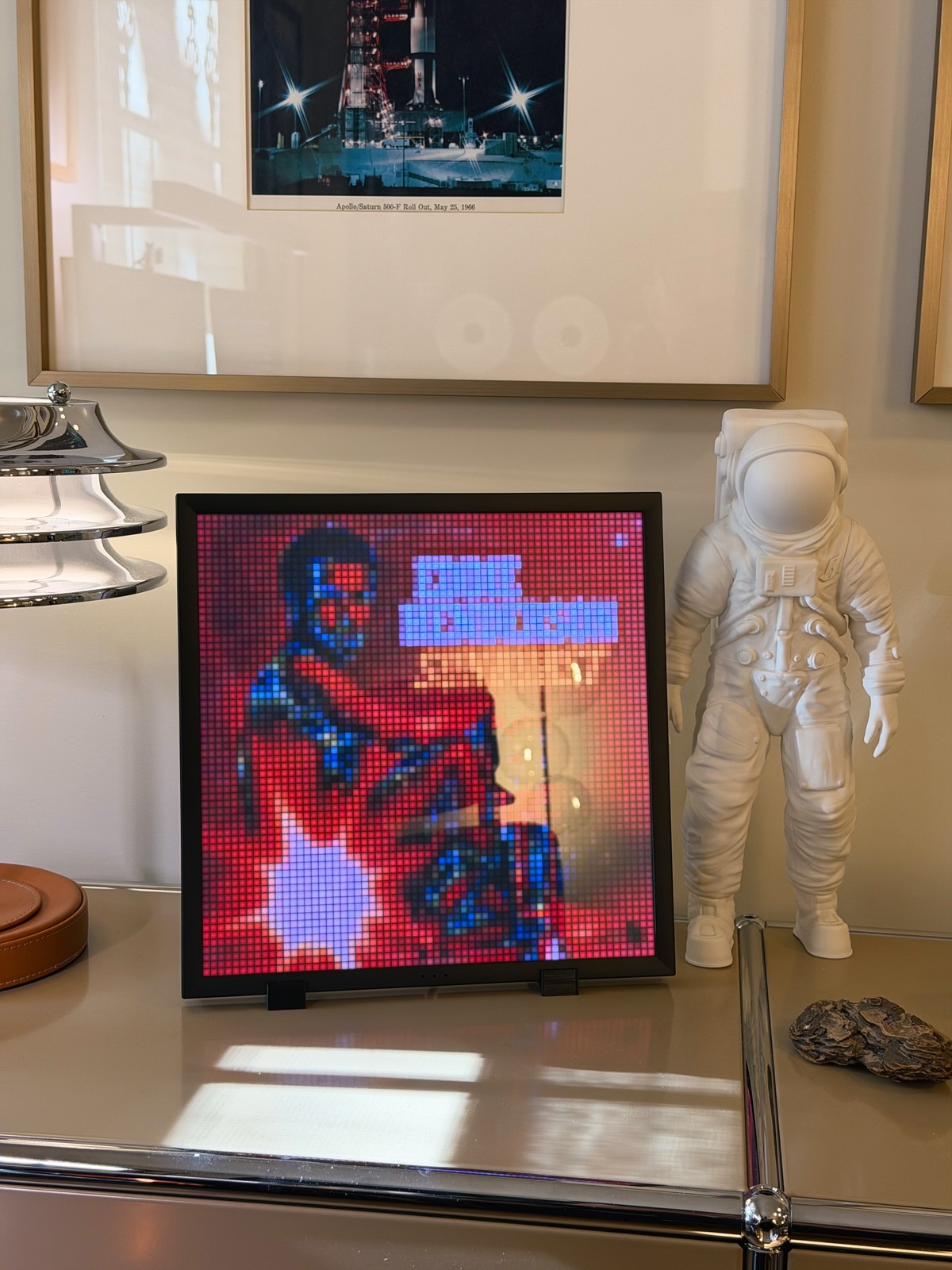
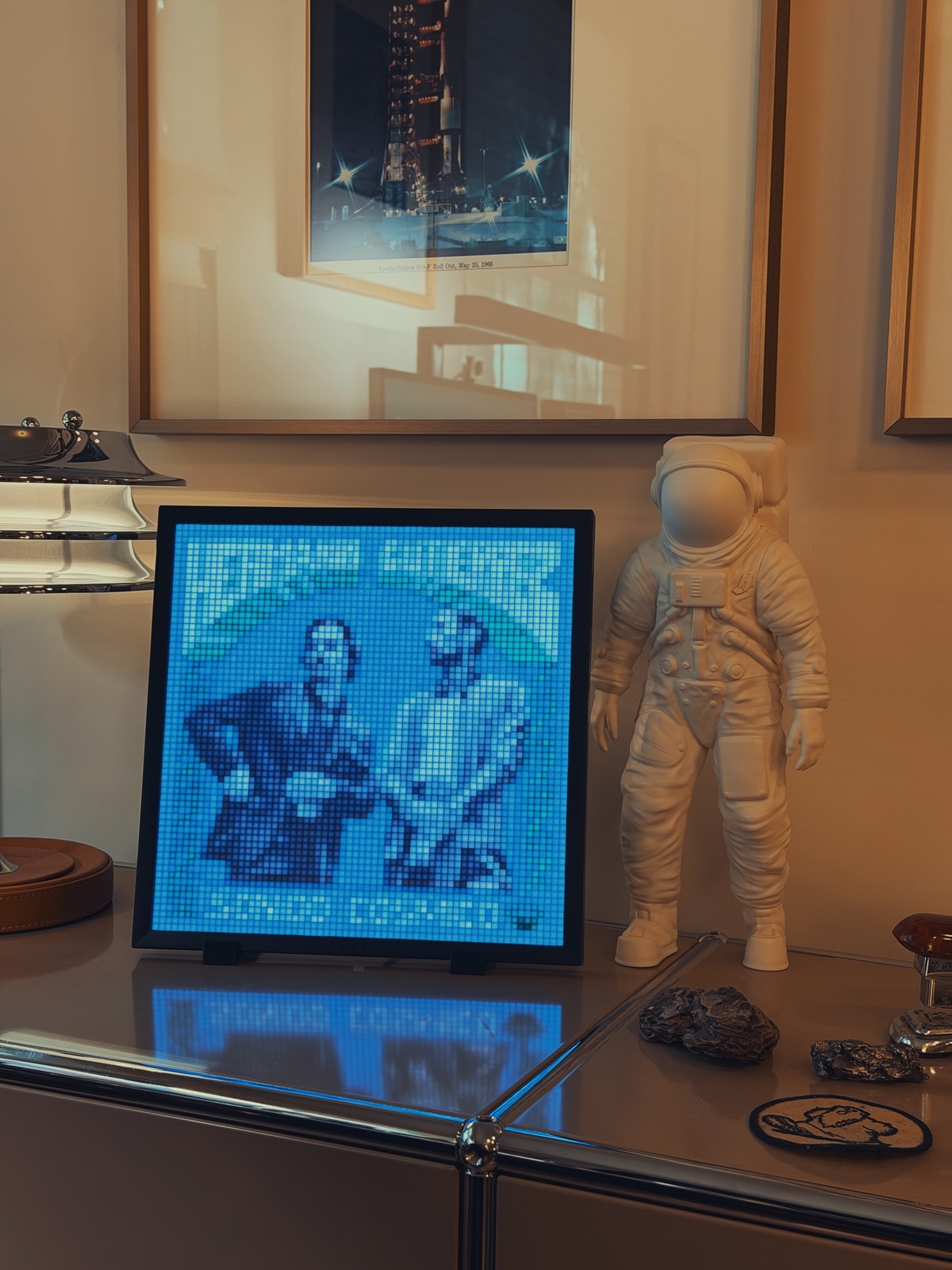
It also adds another dimension to the old and new, analog and digital dynamic that Space & Time embodies. The albums are old and the presentation is digital, but it’s a retro-digital format rather than, say, full HD. An album from 1973 is being played by an AI in 2026, streamed over the internet, and then shown on a screen that looks like a video game from the late 80s or early 90s.
Later on I realized I wanted a listener counter. I asked Claude to add the number of people listening from outside the house, “as small as possible in the bottom right,” and I got digits 3 pixels wide and 5 pixels tall, with a 1-pixel dark edge around them. At zero, the corner stays empty. (None of the photos here show the number. They were taken before it went live.)
It sits on the console to the right of my desk, just in my peripheral vision, so I can see the change without it being front and center. Track length is a really nice cadence for images changing on a screen. It’s not distracting me with constant motion, but it gives me something to look at and smile about every few minutes.
My 17-year-old son also thinks it’s cool, which is really the only validation I need.